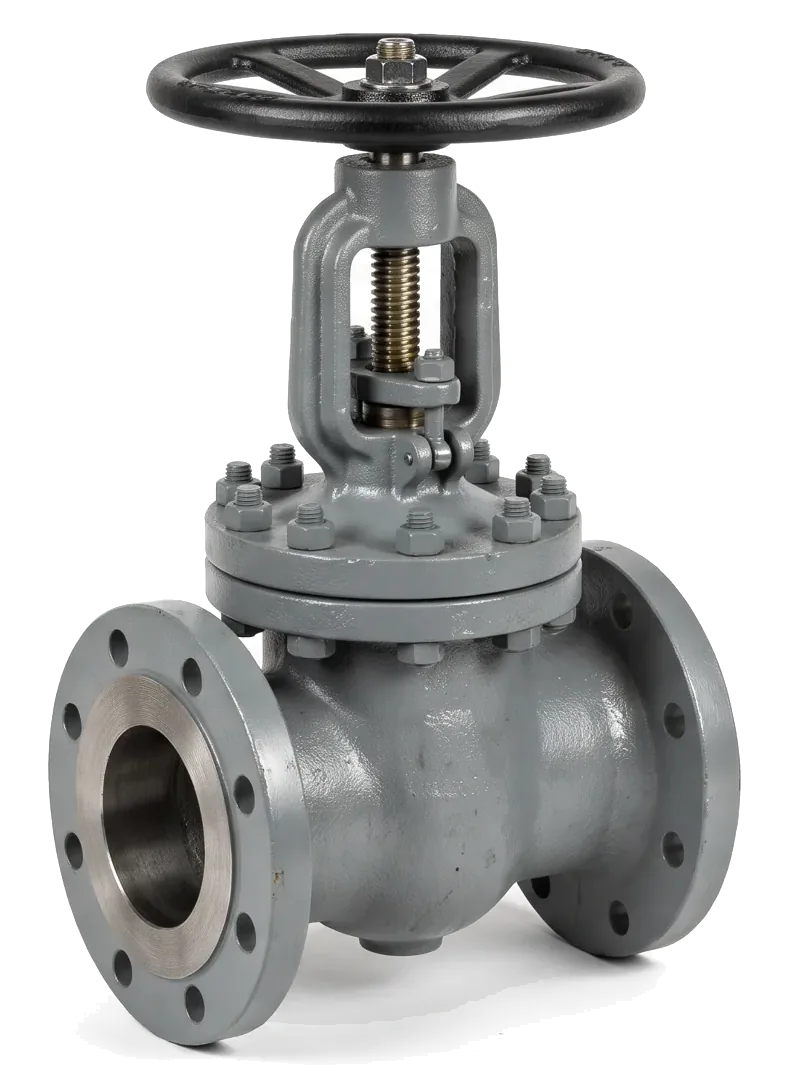
Gate valve vs globe valve: which should you specify?
The two most common valves in any plant look alike from the outside and do different jobs inside. Choosing the wrong one costs pressure drop, worn seats or a valve that cannot regulate. Here is how to decide.
The short answer
Specify a gate valve where the line is either fully open or fully closed and you want the least possible pressure drop. Specify a globe valve where the valve must set a flow rate, be opened a crack for a long time, or be operated often. A gate valve left half open wears its seats; a globe valve left fully open costs several times the pressure drop of a gate valve.
How each one works
In a gate valve a flat or wedge-shaped disc slides down across the bore at right angles to the flow. Fully open, the disc is lifted clear into the bonnet and the bore is straight through: fluid sees almost no obstruction, which is why gate valves are the isolation valve of choice on pipelines, pump suctions and unit battery limits. Part open, the flow passes under and around the wedge, which vibrates, and the seat faces are eroded by the high-velocity jet; the valve will eventually fail to seal.
In a globe valve the flow turns up through a seat ring in the middle of the body, past a disc that moves straight down onto the seat, and turns again to leave. The two changes of direction cost head, but the straight-line disc movement means the opening is proportional to the stem position and stable at any setting. The disc and seat are designed for throttling and take the jet without damage. The Valve Lab shows both in motion.
Pressure drop
Fully open, a gate valve has a resistance coefficient (K) of roughly 0.1 to 0.3; a T-pattern globe valve of the same size has K of roughly 6 to 10, and a Y-pattern globe valve about half that. On a long cooling-water line or a pump with little spare head, that difference decides the valve. On a short steam branch feeding a heater, it does not.
Throttling and control
A globe valve regulates cleanly from about 10 % to 100 % open and can be fitted with a plug, needle, V-port or parabolic disc to suit the control range. A gate valve regulates badly, with most of the flow change in the last quarter of travel, and the specification of every operator and manufacturer says the same thing: do not use it to throttle. Where a line needs occasional regulation and tight isolation, the usual answer is two valves: a gate valve for isolation and a globe valve, or a control valve with its bypass globe, for regulation.
Size, class and cost
Both are cast to API 600 and BS 1873 above 2" and forged to API 602 at 2" and below. In small sizes a forged globe valve costs about the same as a forged gate valve. In large sizes the globe valve becomes heavier and more expensive quickly, which is one reason gate valves dominate above 8" and globe valves are rare above 12". For high-pressure steam at Class 900 and above, both are available with pressure-seal bonnets.
Maintenance and sealing
A gate valve's seats are inside the body and take a skilled fitter to recondition; its stem is rising and the packing sees the full stroke. A globe valve's seat and disc are reached by lifting the bonnet and are easier to lap or replace in place, and the shorter stroke is easier on the packing. For fugitive-emission service, both are available with bellows-sealed stems, though bellows globe valves are far more common.
What to write on the RFQ
- Gate valve: size, class, body and trim (API 600 trim number), bonnet type, wedge type (solid, flexible, parallel slide), end connection, operator.
- Globe valve: size, class, body and trim, pattern (T, Y, angle), disc type, flow direction, bellows seal if required, end connection, operator.
- Both: design standard, test standard (API 598), documents (MTC 3.1 or 3.2, NACE, TPI), delivery location.
Send the list on WhatsApp or through the quotation form and we confirm the right valve per line, with stock availability from Dubai.
Related products
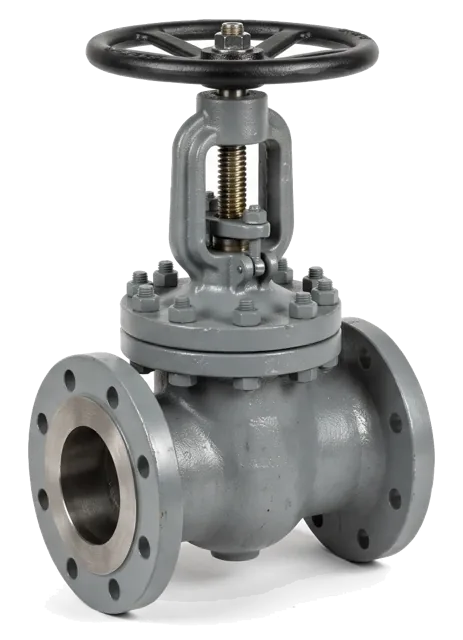
Gate valves
Full-bore isolation with minimal pressure drop. API 600 cast steel and API 602 forged steel, 2" to 48".
Sizes, classes and brands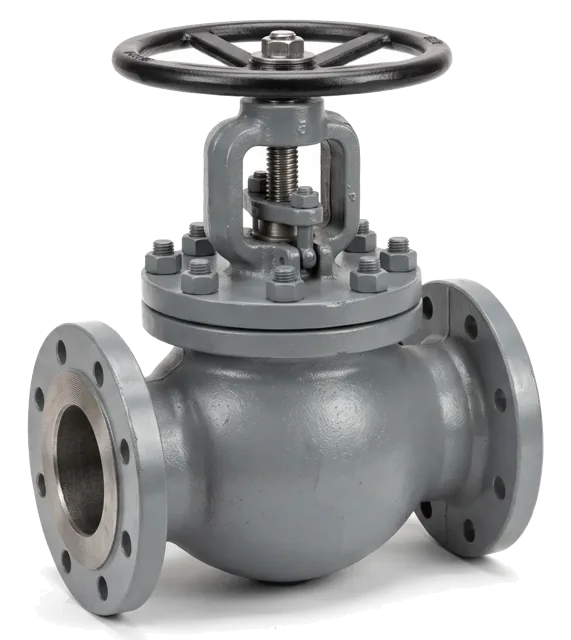
Globe valves
Stable throttling for steam, fuel and process lines. Cast and forged, ½" to 24".
Sizes, classes and brands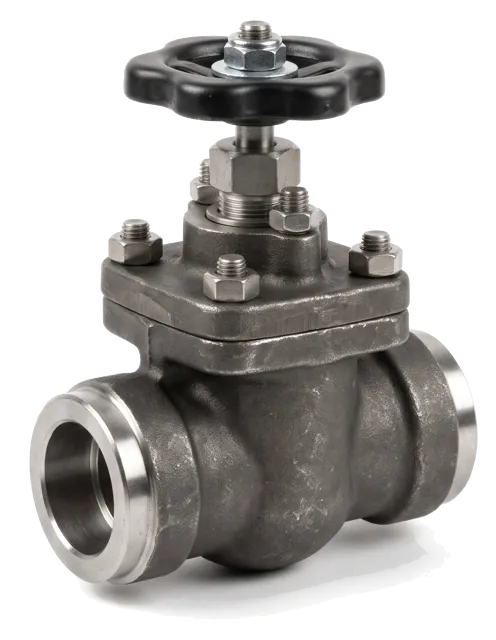
Forged steel valves
Forged gate, globe and check valves to API 602 in A105, LF2, F11/F22, F316 and F51, ¼" to 2".
Sizes, classes and brandsSend us your enquiry and hear back within one working day
Share your BOQ, specification or approved brand list on WhatsApp, or use the request-a-quote form. We confirm availability, pricing and lead time, line by line.